
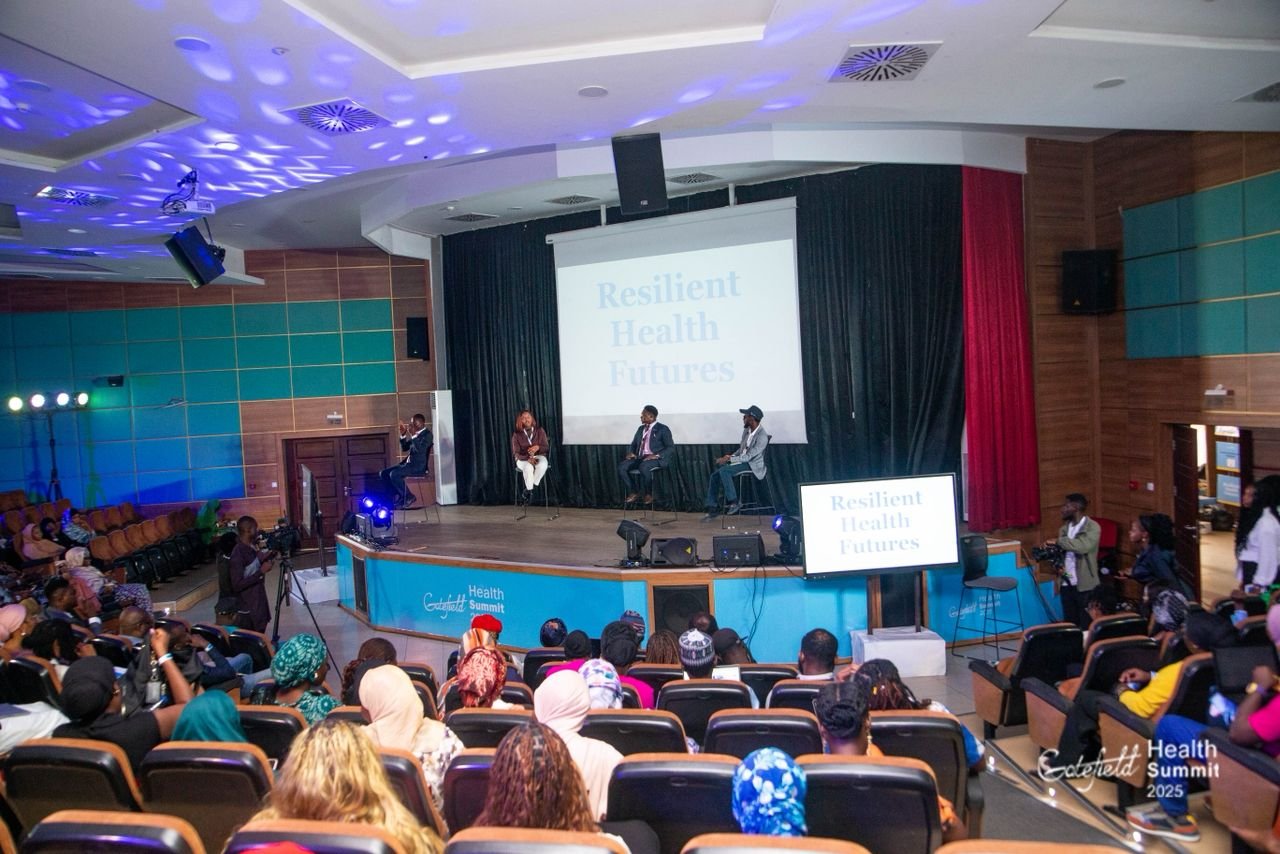
Policy makers and other stakeholders have called for stronger investments in data-driven and locally led approaches to strengthen health systems in Nigeria and across Africa.
This was part of the resolutions of the two-day Gatefield Health Summit (GHS) 2025 in Abuja, with the theme, ‘Resilient Health Futures’.
At the summit, policymakers and health experts agreed that Africa’s path to resilience depends not only on increased funding but on how effectively nations leverage data, research, and local expertise to design smarter, more responsive systems.
The statement quoted Adaeze Eche-George, Programme Associate at Corona Management Systems (CMS), as saying that resilient systems are data-driven systems.
“When technology, evidence, and human insight work together, countries can deliver smarter, faster, and more equitable health outcomes,” she said.
The Summit, which convened top decision-makers and thought leaders from across the continent, spotlighted the need to strengthen health data infrastructure and promote innovations grounded in African realities.
One of the highlights of the event was the presentation by CMS, a leading provider of technical assistance and ICT-enabled health solutions, showcasing how African-led innovation is transforming healthcare delivery.
The organisation also showcased the Nigeria Malaria Modelling Fellowship (MMF), developed in partnership with the Nigeria Centre for Disease Control (NCDC), National Malaria Elimination Programme (NMEP), and the World Health Organisation (WHO).
During one of the sessions on tobacco control, experts warned against adopting generic global frameworks without adapting them to local contexts.
On her part, Dr. Catherine Egbe of the South African Medical Research Council said, “The tobacco endgame is not mutually exclusive to tobacco control; without effective control, implementing the endgame is nearly impossible.”
Also, Prof. Felicia Anumah said that Nigeria currently has over 19.8 million malnourished children, the highest in Africa, warning that the country now faces a ‘double burden’ of undernutrition and rising obesity rates.
Similarly, the Summit addressed the growing threats of malnutrition and antimicrobial resistance (AMR), with Dr Vivian Kwaghe describing AMR as a ‘man-made crisis’, urging African governments to invest in coordinated surveillance systems across human, animal, and environmental health sectors.
Tackling the Emerging Threats: Nutrition and AMR Nutrition and antimicrobial resistance (AMR) were identified as twin threats to population health.
Prof. Felicia Anumah stated that Nigeria now has 19.8 million malnourished children -the highest in Africa – while obesity rates continue to climb, creating a ‘double burden’ of undernutrition and overnutrition.