
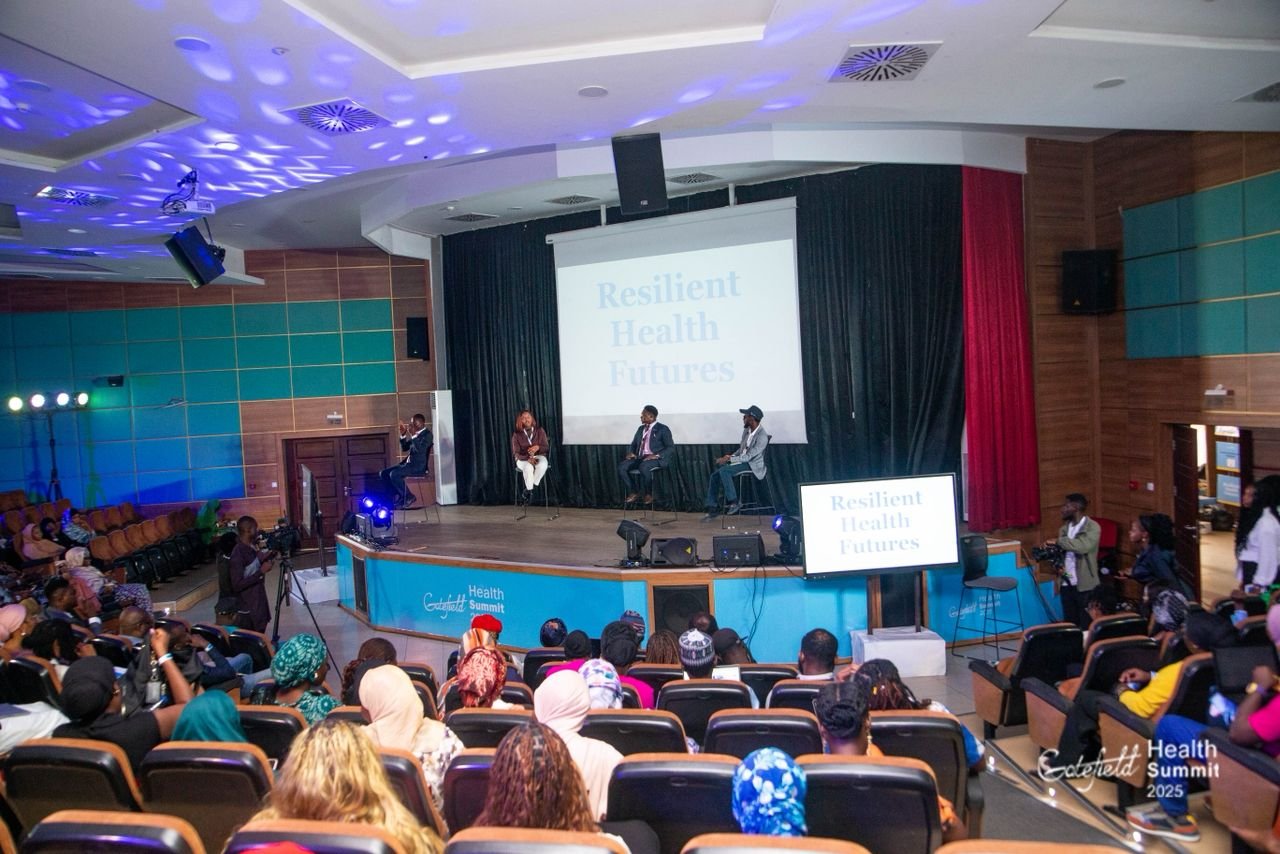
The founder and Chief Executive Officer, Gatefield, Adewumi Emoruwa has said that Nigeria’s declining life expectancy, now at just 54 years, reflects deep structural weaknesses in Nigeria health sector that must be urgently addressed.
He said this on Wednesday in Abuja at the Gatefield Health Summit (GHS) 2025, themed, ‘Resilient Health Futures’.
The event saw health advocates, policymakers, and researchers asking the government to subsidize essential drugs, expand health insurance, and incentivize local pharmaceutical production to reverse the trend for the wellbeing of the citizenry.
They warned that Nigeria’s goal of building a resilient health system will remain elusive as long as millions of people living with diabetes, cancer and other chronic diseases cannot access or afford treatment.
This year’s focus is on strengthening local health resilience through chronic disease management, outbreak preparedness, women’s health, antimicrobial resistance, health financing, and the One Health approach.
“At 27, the average Nigerian is already halfway through life. In Europe, that midpoint comes around 43, while in parts of Asia, people live almost twice as long.
“We are dying young not because we are African, but because our health systems are fragile and underfunded,” Emoruwa said.
He warned that the era of donor-driven health funding was fading, urging Nigeria to strengthen domestic responses to non-communicable diseases such as diabetes, hypertension, and cancer.
He said, “The most important question is, what do we need to do differently to make ourselves live longer?
“We are starting to have young children having diabetes. When we checked, some baby foods in Nigeria contain up to six grams of sugar, compared to zero sugar in European brands. We are feeding our babies sugar from birth, and people are dying from preventable diseases because our food is poorly regulated.
“The biggest question we face is why Africans are dying younger than they should. This loss of potential is the crisis. The difference between a life lived in the Global South and a life in Europe is the resilience of our systems – the gap is resilience.
“If AMR is unaddressed, it could claim 10 million African lives annually by 2050. This is the equivalent of erasing the population of Greece or Portugal each year.”
Also, the Managing Director of Society for Family Health (SFH), Dr. Omokhudu Idogho, represented by Public Health Specialist Dr. Anthony Nwala, noted that locally driven solutions and affordable health interventions should be prioritised.
“For us, resilience in health is about how we move the needle forward, how we get innovative, and think about health financing.
“The environment is changing, the external aid is dwindling, but does that mean we should remain at $5 when some countries are $2,500? If this is possible with non-communicable diseases, it’s possible across the health spectrum.
“We are in a situation where financing health may not be exactly the priority of the government, but everyone of us is the government, and we are all middle-schoolers. We must collectively come together and think about resilience across the health spectrum as it affects patients,” he said.
A Consultant Obstetrician and Gynaecologist at Ahmadu Bello University Teaching Hospital, Zaria, Dr. Aisha Mustapha, stressed the urgency of maternal health and women’s cancers.
“Nigeria is the country with the highest maternal mortality in the world. What we see is that women die from pregnancy and childbirth complications in Nigeria.
“By women’s cancers, I mean cervical, ovarian, vaginal, vulva, fallopian tube, endometrial, and others, including breast. Breast cancer is the commonest, but very importantly, cervical cancer causes the highest mortality and morbidity among women in Nigeria,” she said.
The President-elect of the International Diabetes Federation, Dr. Niti Pall, emphasised the importance of prevention and innovation in primary care.
“We need people to be trained better, we need to give them tools that help them treat their patients better. Patients must also be empowered to manage their own care.
“We do need to work collaboratively with the government, with other private players, to make sure that we have all the tools in place.
“Many digital tools are democratising healthcare, and we need to make them available to everybody. We need to democratise them for everybody across the globe and particularly in Africa,” she said.