
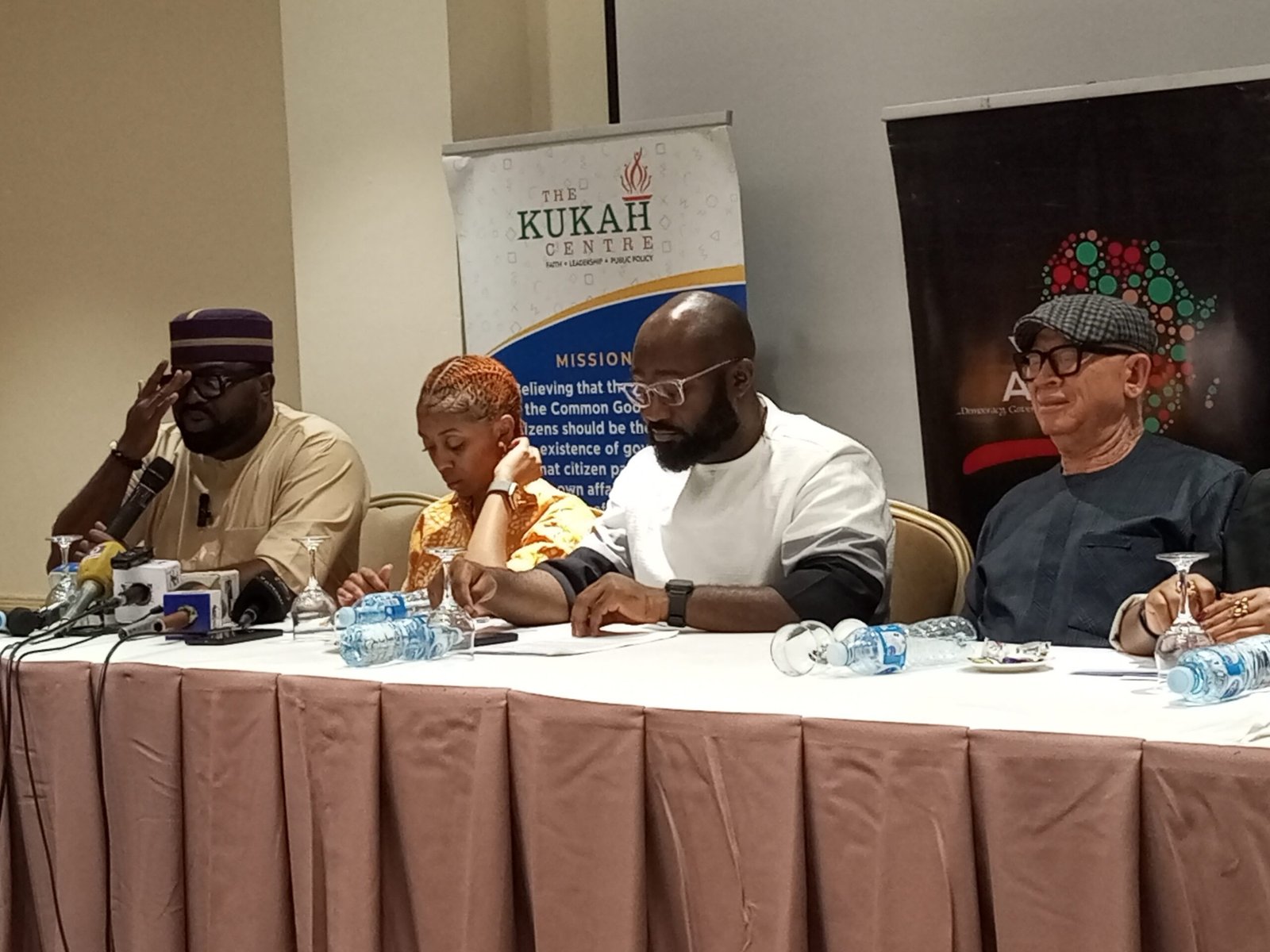
Ahead of the 2027 elections, the coalition of Civil Society Organisations (CSOs) has said that the Electoral Act 2026 contains significant flaws that would undermine electoral integrity, entrench incumbency advantage.
The CSOs which included Centre for Media and Society (CEMESO), The Kukah Center, International Press Centre (IPC), ElectHer, Nigerian Women Trust Fund, The Albino Foundation (TAF) Africa and Yiaga Africa expressed their dissatisfaction while addressing a press conference on Thursday in Abuja.
Speaking on behalf of the CSOs, the Founder of TAF Africa, Mr. Jake Epelle said the Act is imperfect, incomplete and leaves dangerous loopholes open and erects new barriers to participation.
He stressed that the Act was a missed opportunity for the transformative electoral reform that Nigeria requires and that Nigerian citizens deserve.
Epelle pointed out that when reforms are rushed, consolidated without scrutiny, and adopted without full disclosure, public confidence inevitably erodes, saying this approach does not reflect deliberative lawmaking and reflects a troubling departure from the transparency and accountability that electoral reform demands.
He noted: “The decision of the Presidency to grant assent without addressing the substantive legal, technical, and democratic concerns raised by civil society, professional bodies, and even some members of the National Assembly signal a troubling prioritisation of political expediency over electoral integrity.
“Electoral reform should be guided by broad consultation and consensus, not compressed timelines and executive finality. This sets a dangerous precedent: that foundational democratic laws may be enacted despite credible warnings from stakeholders charged with safeguarding electoral transparency.
“Such an approach risks eroding public trust at a time when confidence in the electoral system remains fragile and must be deliberately strengthened, not casually tested.”
On his part, Samson Itodo said the Electoral Act 2026 does not guarantee the credibility of the process.
He stated: “How do you pass an Act that limits the power to activate INEC’s administrative review of election results when they are declared under duress or in contravention to only when you receive reports from INEC officials; When we know from previous elections that sometimes the returning officers, the collation officer and sometimes INEC officials are the same people who are complicit. You think that people who are complicit will file a report. No, they won’t.
“And so when you look at all the safeguards that Nigerians demanded to be included in this Act to safeguard the legitimacy of future elections, what was done was to remove the safeguard. So we don’t agree that this Act aligns with the wills and aspirations of people.
“In actual fact, it is an Act that runs contrary to public expectations, and I would say that the entire political class involved in this betrayed the trust of Nigeria.”
Responding, the Spokesperson of the House of Representatives, Hon. Akin Rotimi acknowledged that he knows a good number of Nigerians are not quite pleased with the outcome, but added that the law was passed in keeping with the Parliamentary rules.