
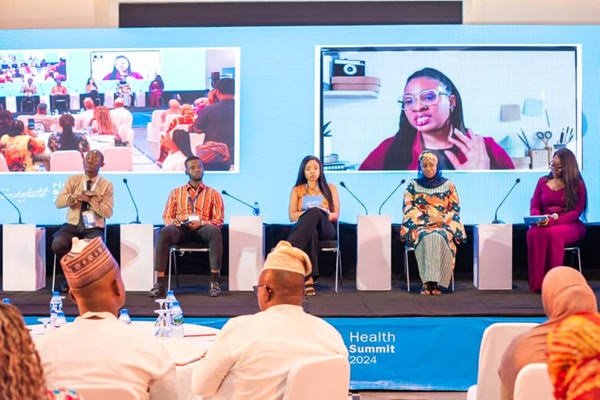
The Gatefield has said that a health summit bringing together global and African leaders to define a new agenda for resilient and equitable health systems across the continent as part of measures to address the growing health crisis in the continent, would be held in Abuja.
Public Health Lead at Gatefield, Omei Bongos, said that the summit is scheduled to hold from 22 to 23 October at Nile University, Abuja.
She noted that across Africa, health systems are under unprecedented pressure.
Bongos noted: “From West to Southern Africa, rising chronic diseases, drug-resistant infections, and underfunded mental and women’s health services threaten millions of lives.
“Against this backdrop, the Gatefield Health Summit 2025 at Nile University, Abuja (October 22–23), will convene global and regional leaders to define a new agenda for resilient health futures.
“Sub-Saharan Africa stands at a defining moment for health resilience. Fewer than 8% of people across the region have health insurance, even as the burden of chronic diseases rises faster here than anywhere else in the world.
“Nearly one in four African lives is cut short by non-communicable diseases (NCDs) such as heart disease, cancer, and diabetes,” she said.
Bongos said that drug-resistant infections now kill more Africans than HIV/AIDS or malaria, signaling a new era of global health insecurity.
According to her, if unchecked, antimicrobial resistance could claim 10 million lives annually by 2050, surpassing cancer as the world’s leading cause of death.
Behind these numbers lies a deeper crisis of access, equity, and investment. Africa carries 25% of the world’s disease burden but receives only 3% of global health spending.
Each year, 150 million Africans face catastrophic health expenses that push families into poverty, underscoring the fragility of financing systems.
Bongos explained that women’s health and mental health remain critically under-resourced.
She added that alf of African women of reproductive age are anaemic, and many still face uneven access to contraceptives, maternal care, and HIV prevention.
Meanwhile, 116 million Africans live with mental health conditions, yet less than two per cent of global health funding targets this crisis.
Bongos stressed that across the continent, warning signs are clear: one in three adults has high blood pressure; one in three people can obtain antibiotics without a prescription, and when antibiotics fail, even simple infections can turn deadly.
The erosion of basic health protections threatens to reverse decades of progress in life expectancy, economic growth, and stability.
“The Gatefield Health Summit 2025 will convene policymakers, researchers, and private sector leaders to redefine resilience across Africa.
“From food and funding to women’s health and medicines, the agenda recognizes the shared truth that health systems must be built to endure,” said Shirley Ewang, Advocacy Lead at Gatefield,” Bongos said.