
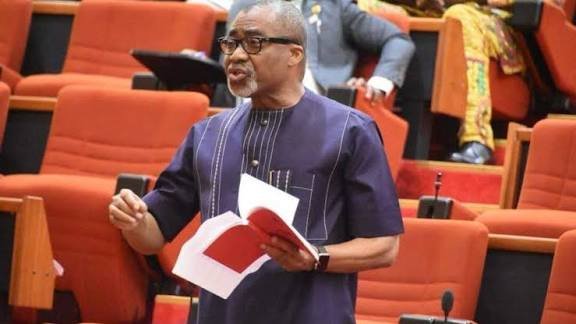
Abia State senator, Enyinnaya Abaribe and other stakeholders has urged the federal government to as a matter of prioritise harness the potential of Marine and Blue Economy for the development of the country.
The senator representing Abia South senatorial district stated this in Abuja at the unveiling of a book, “Blue Economy: Gateway to a Sustainable Future” writing by Dr. Chika Chukwudi.
He said the book showed that there are important parts of the waters that we have not exploited and urged the federal government to tap from the book inorder to develop the blue economy industry.
He praised the author for writing the book and said the book gave an insight into the new marine and blue economic activities.
The author of the book, Dr. Chukwudi stressed the importance of the blue economy in driving Nigeria’s economic growth and sustainable development.
She noted that the blue economy represents a profound opportunity for Nigeria to unlock long-term financial and economic value through the sustainable use of ocean, coastal, and inland water resources.
According to her, The blue economy was globally valued at over $3 trillion annually, and Nigeria has the potential to benefit immensely from this sector and identified key areas of opportunity, including fisheries and aquaculture, maritime transport, port services, marine tourism, renewable ocean energy, and marine biotechnology.
Chukwudi lamented the insufficient early exposure of young Nigerians to blue economy knowledge, skills, and career pathways, advocating for the integration of blue economy education into Nigeria’s primary and secondary school curricula.
She unveiled “THE BLUE GATE”, a non-governmental initiative dedicated to advancing awareness, education, and capacity-building in the blue economy, particularly among primary and post-primary learners.
In his goodwill message at the event, Rep. Sam Onuigbo, Chairman of the Committee on Security, Climate Change and Special Interventions, North East Development Commission (NEDC), said that the blue economy is a catalyst for economic diversification, climate resilience, job creation, and long-term national competitiveness.
“The blue economy represents far more than the sustainable use of marine and aquatic resources—it is a gateway to economic diversification, climate resilience, job creation, and long-term national competitiveness,” he said.
Also, the book reviewer, Professor Ngozi Ezenwosu said the whole essence of the book is to create awareness for the Nigerian government and the world that there are potentials and opportunity and you need to honest it.
The book is made up of 106 pages of seven chapters with each chapter divinator different topics in blue economy.