
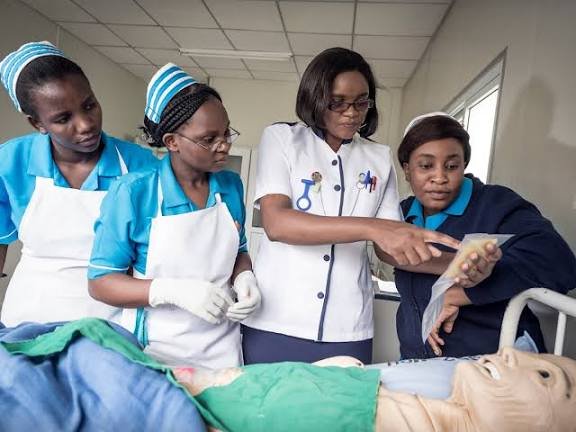
The CARE Nigeria, through its Enhancing Resilience in Frontline Community Health Workers (EnRiCH) Project, has trained 500 Frontline Health Workers (FLHWs) across Katsina, Mani, and Charanchi Local Government Areas (LGAs) of Katsina State.
The project saw the organisation equipping beneficiaries with digital tools and new skills to strengthen health service delivery in their communities.
Heaalth Sector Lead at CARE Nigeria, Dr. Amina Abdullahi reaffirmed CARE’s commitment to advancing universal health coverage through women-centered and technology-enabled health system strengthening.
She stated: “Frontline community health workers are the backbone of Nigeria’s primary health care system, especially in rural and underserved communities.
“Through EnRiCH, we are investing not only in their technical skills but also in their digital capacity, financial resilience, and agency as change agents.
“This holistic approach ensures they are better equipped, more motivated, and deeply rooted in the communities they serve – ultimately driving better health outcomes for women, children, and families across Katsina State.”
The nine-day capacity-building initiative, conducted in three batches per LGA, aimed to enhance the knowledge, skills, and motivation of health workers to deliver quality Reproductive, Maternal, Newborn, Child, and Adolescent Health and Nutrition (RMNCAH+N) services, while integrating Gender-Based Violence (GBV) prevention and response.
As part of the intervention, all 500 participants received smartphones preloaded with the EnRiCH Digital Learning Platform (DLP), an innovative mobile-based tool designed to promote continuous learning, mentorship, and peer-to-peer collaboration.
Through the DLP, health workers can access up-to-date guidelines, complete online learning modules, and refresh their knowledge anytime, anywhere, bridging the gap between traditional training and real-time service delivery.
The training also introduced the Frontline Health Workers Savings and Loans Association (FSLA) model, which promotes financial literacy, collective savings, and economic empowerment among women health workers.
The FSLA approach fosters social solidarity and supports women to build financial resilience while contributing to their communities’ well-being.
For many participants, the training was transformative.
Fatima Aminu Bello, a Community Health Extension Worker from Charanchi LGA, sharing her experience said, “Now, with my smartphone and access to the Digital Learning Platform, I can learn every day, ask questions, and share experiences with colleagues. This will greatly help me reach more women, girls, and children in my community.”
The EnRiCH Project forms part of CARE Nigeria’s 2024–2030 Country Strategy, which aims to empower 2,000 frontline health workers in Katsina State to reach more than one million people with quality healthcare.
The project was implemented in partnership with the Katsina State Ministry of Health, the Katsina State Primary Health Care Development Agency (SPHCA), and Life Helpers Initiative (LHI).
The project underscored CARE’s global mission to strengthen health systems, promote gender equality, and ensure that frontline health workers are recognized, equipped, and supported to thrive.