
The federal government has affirmed its commitment to breaking down the barriers preventing women from fully participating in Nigeria’s gas economy through enhanced participation of Women in Nigeria’s Gas Sector (WINGS) Strategy.
WINGS is a key component of the PowerHer774 pillar under the Renewed Hope Social Impact Interventions (RH-SII774) of the Federal Ministry of Women Affairs.
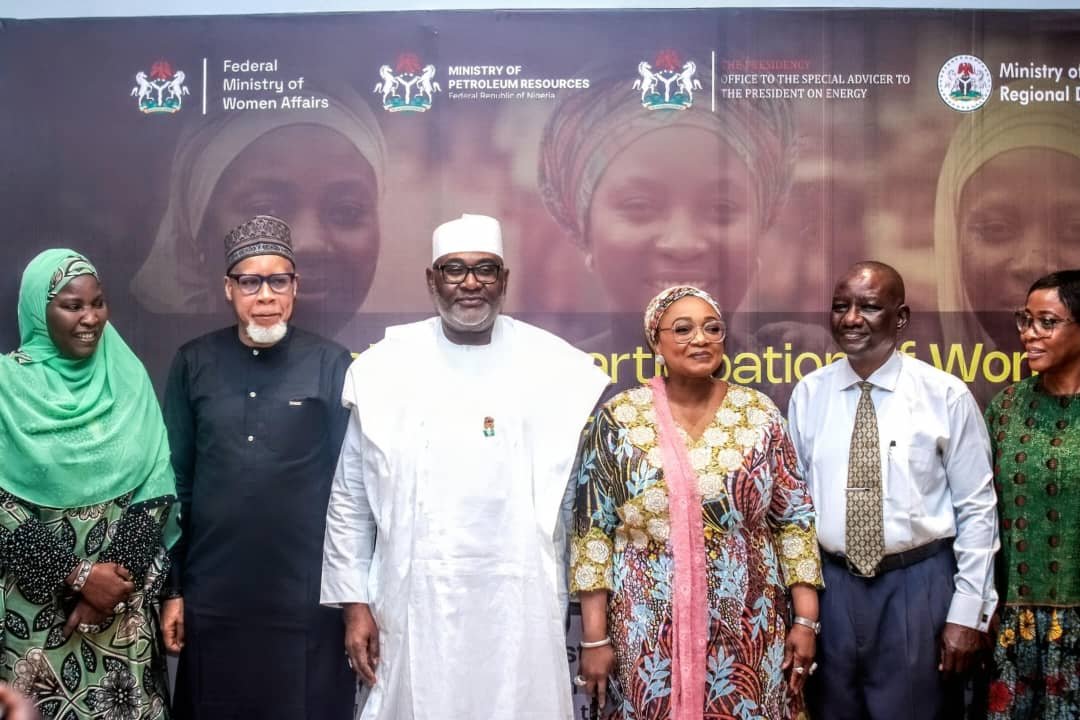
The Stakeholders’ Co-Creation Workshop on WINGS which was held in Abuja, convened coalition of government leaders, legislators, private sector players, and development partners to advance women’s inclusion and economic empowerment across Nigeria’s gas value chain.
Delivering her keynote address titled; “Addressing Energy Poverty through the Renewed Hope Social Impact Interventions – 774,” the Minister of Women Affairs, Imaan Sulaiman- Ibrahim, stated that under the Renewed Hope Agenda is ensuring women are not left behind in the nation’s energy transformation.
Ibrahim explained that the goal is to move women from passive energy users to active stakeholders — owning micro-plants, managing distribution networks, and driving Nigeria’s clean cooking revolution.
She said that energy access is not just about power; it’s about equity, opportunity, and dignity, noting: “When a woman gains access to clean energy, she gains time, health, income, and a voice in the economy.”
The minister further added that WINGS builds on the Ministry’s earlier interventions in LPG cylinder distribution and the establishment of the Nigerian Women LPG Steering Committee, consolidating these efforts into a five-pillar strategy that institutionalises women’s participation across the gas value chain.
According to her, These five strategic pillars include financial access and investment, enterprise and technology integration, workforce development, community engagement, and policy reform — designed to drive clean energy adoption, strengthen local economies, and advance Nigeria’s just energy transition.
Oh his part, the Minister of State, Petroleum Resources (Gas), Ekperikpe Ekpo, commended Ibrahim on the visionary plan to push Nigerian women to the frontlines of empowerment.
He stressed that while women are the backbone of Nigeria’s domestic energy use, their participation in the gas value chain remained largely confined to the consumer end.
The minister noted that they are underrepresented as entrepreneurs, technicians, innovators, and strategic asset owners.
Ekpo added that enhancing women’s participation is a strategic economic imperative that must change to build a resilient and inclusive energy economy.
He affirmed that In alignment with the framework of Nigeria’s Decade of Gas (2021–2030), his ministry stands ready to collaborate to ensure women are not just beneficiaries of gas programs but the architects of Nigeria’s clean energy future.