
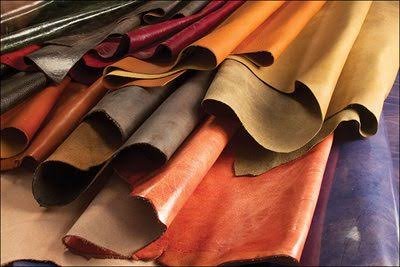
Nigeria talks about cocoa and crude oil as strategic exports. Leather deserves the same seriousness not because of hype, but because the numbers, labour base and raw material supply already exist. What we lack is value-chain discipline: standards, incentives, infrastructure and execution.
The tragedy is not that Nigeria lacks leather. It is that we keep exporting it at the wrong point in the chain.
We Have the Inputs, But We Keep Losing the Value
Nigeria is widely recognized as one of the dominant sources of goatskin and kidskin in West Africa. Industry and policy bodies have consistently stated that the country contributes roughly 60% of regional goatskin and kidskin supply, making it a natural anchor for continental leather industry.
Economic and trade commentary also places Nigeria’s goatskin and kidskin resource base at around 46% of West Africa’s and about 18% of Africa’s total, underscoring how unusually strong Nigeria’s raw material position is.
Yet this advantage has not translated into leadership in finished leather goods, footwear, bags, upholstery, and high-value exports. Nigeria remains concentrated in the raw and semi-processed end of the leather value chain, where margins are structurally thin and global competitiveness is weak.
The Nigerian Institute of Leather and Science Technology (NILEST) and industry sources estimate that 40 to 50 million skins are processed by Nigerian tanneries every year. That is not a cottage-industry scale, it is a foundation around which globally competitive manufacturing could be built if properly integrated.
Exports Exist, But They Are Not Where They Should Be
Nigeria does export leather, but mostly in raw or semi-processed form. Public sector and industry briefings have placed Nigeria’s leather exports at a peak of about US$117 million in 2018, with later commentary describing exports as being “in the order of US$272 million.”
Those numbers sound impressive until they are compared with what is possible. The Nigerian Economic Summit Group (NESG) and federal policy documents have repeatedly stated that with value addition, quality standards and export alignment, the sector could generate more than US$1 billion annually.
That is not a fantasy. It is simply what happens when a raw-material-rich country stops shipping value abroad.
This Is Already a Jobs Industry, Not a Hypothesis
Leather is not a boutique craft. It is one of the most labour-absorbing manufacturing chains Nigeria can scale. From livestock markets to tanneries, from footwear clusters to bag-makers and upholstery workshops, hundreds of thousands of Nigerians already depend on it.
The problem is not that leather lacks employment potential, it is that too many of those jobs sit at the lowest-value points in the chain.
Lagos’s Leather Hub Shows What Is Possible
Lagos State’s new Industrial Leather Hub (Oluremi Tinubu Industrial Leather Hub) is the most serious attempt in decades to correct this fragmentation.
According to Lagos State Government projections, once fully operational the hub is expected to:
• Target about ₦387.5 billion (roughly US$250 million) in annual exports,
• Support over 10,000 direct and indirect jobs, and
• Provide training and upgrading for tens of thousands of artisans, with a focus on women and youth.
If even a portion of this is realized in finished, globally competitive leather goods, Lagos alone would materially shift Nigeria’s export profile.
But factories and hubs do not create industries on their own. They require supply discipline, quality systems, certification pathways, and serious access to global markets.
The Raw Material Constraint Is Not Cultural, It Is Industrial
Nigeria has a unique and dangerous distortion: hides and skins diverted into local consumption as ponmo. The Raw Materials Research and Development Council (RMRDC) and other federal agencies have warned repeatedly that this practice is starving tanneries of quality raw materials and undermining the sector’s ability to scale.
This is not about food culture. It is about industrial logic. No manufacturing sector can grow when its core input is unstable in quality and quantity.
Federal policy has already acknowledged that leather is a multi-billion-dollar opportunity if properly industrialized. But that opportunity collapses if raw materials leak out of the value chain.
Why 2026 Is a Make-or-Break Moment
The warning signs are already visible in the trade data. Nigeria imports large volumes of finished leather products while exporting far less in value-added form. National Bureau of Statistics trade reporting for 2025 shows leather product imports running far ahead of exports, reinforcing that Nigeria is effectively funding other countries’ manufacturing instead of its own.
This is not a marginal problem, it is structural.
No Amount of Rhetoric Will Fix This
The diagnosis is straightforward:
• Nigeria already has the raw materials.
• Nigeria already has the labour.
• What it lacks is value-chain integration.
That means:
• Prioritizing finished leather goods over raw hides,
• Enforcing quality, certification and export standards,
• Aligning policy to measurable export outcomes, not slogans, and
• Treating hides and skins as strategic industrial inputs, not casual by-products.
If Nigeria executes on these fundamentals by the end of 2026, leather will become a true economic lever, creating jobs, exports and industrial depth.
If not, it will remain what it has been for decades: a sector rich in promise, but poor in execution.