
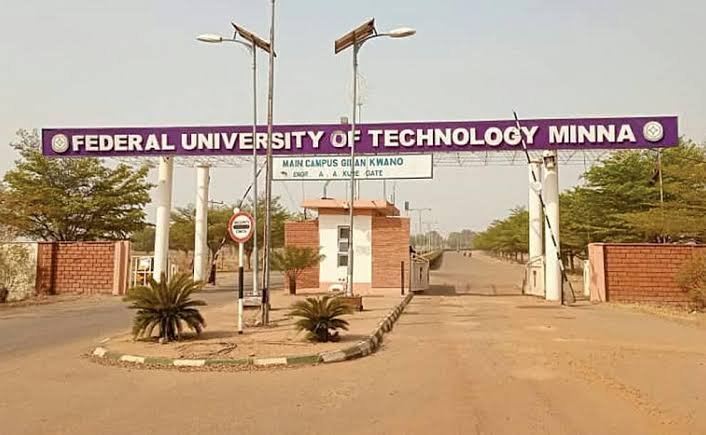
There is a peculiarly Nigerian species of political actor — let us call him Mallam Ambition — who wakes up one Tuesday morning, looks out of his window, squints at his neighbour’s house, and reaches a conclusion that would baffle a first-year law student, confound a mediating imam, and bring a Yoruba elder to his knees in prayer: he decides that the house is not being used ‘optimally,’ and therefore it belongs to him.
Never mind that he sold the house to his neighbour forty-three years ago. Never mind that a price was paid, a transaction witnessed, and handshakes exchanged. Never mind that the neighbour has since added three rooms, dug a borehole, enrolled his children in the compound school, and built a chapel and a mosque side by side in the backyard — symbols of coexistence that even the United Nations would find admirable. Mallam Ambition has a second wife incoming, and he needs space.
This, in essence — with only the mildest of creative embellishments — is the story of the Niger State Government and the Federal University of Technology, Minna, and its Bosso Campus. And if it does not make you laugh, cry, or pour a generous tot of something strong, then you, dear reader, have clearly spent too long in Nigerian public life and are now professionally numb to absurdity.
How the Transaction Actually Happened (A Love Story, Really)
Let us set the scene. The year is 1982. Nigeria is young, ambitious, and still wearing the optimistic pinafore of post-independence development. The Federal Military Government, in a commendable moment of foresight, has decided to establish universities of technology across the nation to produce the engineers, scientists, and technologists who would build the Nigeria of tomorrow. One of such institutions — Federal University of Technology, Minna — is to be sited in Niger State.
Enter the Pioneer Vice Chancellor, Professor Jonathan Othman Ndagi — a man of extraordinary grit who, by his own account, would later preside over an institution with no running water and no electricity, where staff and students used kerosene lamps for weeks and water tankers served as the municipal water authority. Professor Ndagi approaches the Executive Governor of Niger State, Alhaji Auwal Ibrahim — a man of apparently sound mind and generous civic spirit, today revered as the Emir of Suleja — and says, in the manner of all great academic visionaries: ‘Your Excellency, I need a building. I have students coming.’
Governor Auwal Ibrahim, bless his forward-looking soul, obliges. After due deliberation and a joint meeting involving the Niger State Ministries of Education and Works, the National Universities Commission (NUC), and the Federal University of Technology, Minna — a meeting so properly constituted it would shame many of today’s federal cabinet sessions — it is agreed that Teachers’ College Bosso, formerly the Roman Catholic St. Malachy’s Teachers’ College, will be transferred to FUT Minna. The price? A very reasonable ₦2,800,000.00. The Niger State Government receives the money. The University receives the keys. Witnesses sign. Handshakes are exchanged. Nigeria, for once, does paperwork correctly.
This, to any person with a standard secondary school education in contract law, constitutes an outright sale — a completed commercial transaction that extinguishes the seller’s rights in the property. It is not a lease. It is not a loan. It is not a trial arrangement. It is not a favour subject to withdrawal. The neighbour bought the house, paid for the house, and moved in. Case closed. Or so one would think.
Fast Forward 43 Years: Enter the Second Wife.
We now arrive at October 3, 2025, when — with the solemn gravitas of a man who has clearly never been cross-examined in court — Governor Mohammed Umaru Bago of Niger State dispatches a letter from the Office of the Governor to the Vice Chancellor of FUT Minna, informing him that a forty-year lease agreement on the Bosso Campus has expired and that the Niger State Government would like its property back, thank you very much.
A follow-up letter from the Secretary to the State Government on November 27, 2025 — with the cheerful urgency of a debt collector on Christmas Eve — sets December 1, 2025, as the date by which the university must vacate.
December 1, 2025. Three days after November 27. A university with thousands of students, hundreds of staff, lecture theatres, laboratories, a mosque, a chapel, hostels, a microfinance bank, a model secondary school, a biological garden, and a cooperative society is to be vacated in approximately seventy-two hours. One does not know whether to admire the audacity or commission a psychological study.
Now, back to Mallam Ambition and his second wife. In the village cosmology of Nigerian governance, a man who wishes to accommodate a new bride sometimes looks at available options: build a new room, renegotiate existing arrangements, or — in the most creative of cases — find a reason why his neighbour’s perfectly functioning house is, technically, available.
The reason need not be airtight. It need not survive scrutiny. It need only be stated with sufficient confidence and official letterhead. The neighbour, after all, is merely a federal university. What does a federal university know about fighting a state governor?
Quite a lot, as it turns out. But we shall get to that.
The ‘Lease’ That Never Was: A Comedy of Legal Fiction
The Niger State Government’s position rests on the claim that the original arrangement was a forty-year lease — a temporary grant of occupation that has now, in the fullness of time, reverted to the grantor. This is a charming theory. It has the elegance of a well-pressed agbada and the structural integrity of wet tissue paper.
Professor Ndagi, in his own words recorded in 2013, made clear that he ‘requested for an outright ownership by the University with payment of adequate compensation.’ The compensation was paid. There is no lease agreement on record. There is no lease agreement that was registered. There is no forty-year term in any documented instrument between the parties. What there is, is a completed sale, witnessed by the NUC and two state ministries, for which a receipt — in the form of ₦2.8 million — was duly tendered and accepted.
To describe this transaction as a lease is the legal equivalent of a man who sold his car, pocketed the money, watched the buyer drive away, and then — forty years later, when car prices have risen — knocks on the buyer’s door and announces: ‘My friend, that was actually a rental. And it has expired. Kindly return my Peugeot 504.’
The buyer, of course, has since changed the tyres, installed air conditioning, added a sound system, driven it across the country four hundred times, and enrolled his children in driving school using that very vehicle. The ‘landlord,’ undeterred, produces a forty-year-old narrative with all the documentary evidence of a verbal agreement at a bus stop in 1982. Nigeria, as they say, is not for the faint-hearted.
What Is Really Going On? (Or: When Politics Meets Property)
Let us not be entirely naïve. The comedy of this situation has a darker punchline that is less amusing when you are the student whose hostel has just been threatened with confiscation, or the lecturer whose office is apparently now under sovereign claim by a state governor.
The Bosso Campus of FUT Minna is not idle land. It is not a derelict warehouse or an overgrown field. It is a living, breathing academic community. It hosts the School of Science and Technology Education. It is home to the Centre for Human Settlement and Urban Development — an institution whose very mandate is to study how people can be housed with dignity.
There is a poetic irony in the fact that a centre dedicated to the study of human settlements now faces eviction that would displace hundreds of human beings from their settlement. One imagines the researchers looking up from their journals with a weary sense of professional vindication: ‘We told you this happens. We just did not expect to be the case study.’
The campus has a mosque and a chapel. It has a microfinance bank for staff. It has a model secondary school and a staff primary school. It has biological gardens and student hostels. Forty-three years of Federal Government investment — in concrete, in learning, in human capital — stand on this land. And the Niger State Government, apparently emboldened by the conviction that a piece of paper with an official seal can undo all of this in seventy-two hours, wants it back for ‘strategic use.’ What strategic use, one is tempted to ask, requires the displacement of thousands of students and staff? What strategy is advanced by dismantling a functioning institution of learning in a country where the educational infrastructure is already in severe distress?
The answer, of course, is political. It always is. In the algebra of Nigerian governance, ‘strategic use’ is a variable that can mean anything from genuine development to the more familiar desire to reward a political ally, impress a new constituency, or demonstrate gubernatorial authority over federal presence in one’s state.
The second wife, in this analogy, may not even be a person. She may be a project. She may be a plan. She may be the governor’s legacy — a development initiative that will bear his name and face, long after the students have been scattered to the winds and the professors have found new offices.
The Pattern That Should Frighten Us All
If the Niger State Government’s position is upheld — if it is accepted that a state governor can, by executive fiat and official letterhead, claim ownership of Federal Government property through a retroactively invented lease — then no federal institution in any Nigerian state is secure. UNILAG could receive a letter from Lagos State. ABU Zaria might get a knock from Kaduna.
The University of Ibadan — with its magnificent colonial architecture that Oyo State has long admired — might find itself the subject of a forty-year lease theory that was quietly hatched over jollof rice at a government house dinner.
This is not merely a property dispute. It is a constitutional confrontation. The Federal University of Technology, Minna, is a federal institution. Its assets are federal assets. A state government has no more authority to seize a federal university’s campus than a local government chairman has authority to confiscate the Nigerian Air Force.
The 1999 Constitution is unambiguous in its delineation of federal and state powers. Federal institutions are creatures of federal law, funded by federal appropriation, and protected by federal constitutional supremacy.
The danger of allowing this kind of aggression to go unchallenged is not merely legal — it is civilisational. It signals to every ambitious state executive that federal institutions within their borders are fair game when political priorities shift. It says that forty-three years of institutional investment, of student lives shaped and careers launched, can be unravelled by a letter typed on government letterhead with a December deadline. It is the kind of precedent that, once set, does not stay in Niger State. It travels. It metastasises. It becomes the template by which the Nigerian federal system is quietly dismantled, one campus at a time, in the name of strategic development.
To Governor Bago, With Respect and Some Bemusement
We do not doubt that Governor Mohammed Umaru Bago is a man of intelligence and vision. No one ascends to the governorship of a Nigerian state on pure luck alone — the terrain demands cunning, coalition-building, and a certain robust relationship with ambiguity. But this particular gambit — the retroactive lease invention, the seventy-two-hour eviction notice, the confident annexation of Federal Government property — falls short of the intelligence we credit him with. It will not survive judicial scrutiny. It will not survive constitutional challenge. And it will not survive the very particular fury of tens of thousands of FUT Minna alumni who have been roused from their professional lives by the spectacle of their alma mater being threatened with dispossession.
If the Niger State Government has genuine developmental plans for the Bosso area — and one hopes it does, because the photographs from that campus suggest that a great deal of development is overdue — the correct approach is negotiation, not annexation. It is dialogue, not deadline. It is the kind of mature, federal-state cooperation that produced the original 1982 agreement between Governor Auwal Ibrahim and Professor Ndagi. Ironically, the very spirit of that agreement — goodwill, partnership, the smooth establishment of an institution in the State — is now being desecrated by the State Government’s current approach.
Alhaji Auwal Ibrahim, the Emir of Suleja — the man who made the original deal — is still alive. He is revered. His word, in 1982, was that this was a transaction in good faith for the benefit of the nation. We wonder what he makes of this.
Mallam Ambition and the Moral of the Story
Let us return, in closing, to Mallam Ambition and his second wife. In the village, when Mallam Ambition announces that he wants his neighbour’s house back, several things happen simultaneously. The village elders are summoned. The original witnesses to the sale are located. The receipt is produced. The imam is called to mediate. And Mallam Ambition, confronted with the weight of documentation, testimony, and community disapproval, usually retreats — muttering about how the house was never really sold, how it was merely borrowed, how the neighbour has not been appreciating the property correctly.
The neighbour, meanwhile, changes his locks.
The Federal University of Technology, Minna Alumni Association intends to be that neighbour. We are changing the locks — through the courts, through the National Assembly, through the offices of the President and the Minister of Education, through the NUC, and through the mobilisation of every graduate of this institution who ever walked through the gates of Bosso Campus and emerged better equipped for the world. We are not unmoved by the comedy of this situation.
But we are also not amused.
Because behind every absurdist political parable in Nigeria, there are real people. There are students who cannot afford to relocate. There are female undergraduates queuing for water from portable tanks in open courtyards — women who deserve better than what they currently have, and who will certainly deserve nothing better if their campus is seized for ‘strategic purposes’ that are never quite explained. There are lecturers who have built careers on Bosso soil. There are families in the staff quarters who have nowhere to go.
This is not, ultimately, a comedy. It is a parable with a warning embedded in the punchline: that the greatest threat to Nigerian institutions is not external enemies, not economic headwinds, not the proverbial lack of infrastructure. It is the insider — the politician who, having eaten from the common table, now wants to sell the table.
We, the alumni of FUT Minna, say to him clearly and calmly: the table is not yours to sell. It belongs to the students who sit at it. And we will be here, long after the political season has passed, ensuring that they still have a place to sit.
Samuel Medayese, National Secretary, FUT Minna Alumni Association