
More than two decades after Nigeria’s return to democratic governance in 1999, the nation still grapples with one fundamental question: Can democracy truly thrive without credible elections? While Nigeria’s democratic journey has been marked by moments of hope and progress, it has equally been haunted by persistent electoral flaws—flaws that continue to undermine public confidence, weaken institutions, and erode the moral authority of elected leaders.
At the heart of these challenges lies a system in urgent need of reform. Electoral reform is not merely a technical adjustment or an administrative correction; it is a moral necessity and a national survival strategy. Without it, Nigeria risks sliding into an endless cycle of contested mandates, political apathy, and governance failure.
A TROUBLED ELECTORAL LEGACY
Elections in Nigeria have historically been turbulent. From the violence and rigging of the 1964 and 1983 polls to the infamous annulment of the June 12, 1993 presidential election—the one widely regarded as Nigeria’s freest and fairest—the country’s political history bears scars of manipulation and betrayal of the people’s will.
Even in the Fourth Republic, despite constitutional continuity, elections have often been characterized by irregularities, vote buying, ballot snatching, voter intimidation, and the weaponization of poverty. Each electoral cycle seems to follow the same pattern: high expectations, followed by logistical chaos, controversial results, and prolonged legal battles.
The 2023 general elections—despite the promise of technology-driven transparency through the Bimodal Voter Accreditation System (BVAS) and the INEC Result Viewing Portal (IReV)—were once again marred by inconsistencies. The failure to transmit results in real time, the disenfranchisement of voters in several regions, and allegations of collusion between politicians and electoral officials all fueled widespread disappointment.
These recurring failures have one common denominator: the absence of deep, structural reforms.
INEC AND THE QUESTION OF INDEPENDENCE
The Independent National Electoral Commission (INEC) is meant to be the guardian of Nigeria’s democracy. However, its credibility has often been compromised by political interference, weak institutional autonomy, and inadequate funding.
Appointments into INEC leadership positions are still largely at the discretion of the sitting president—creating an inherent conflict of interest and casting doubt on the commission’s neutrality. To ensure true independence, Nigeria must consider constitutional amendments that separate the process of appointing electoral officials from the executive branch, possibly involving the judiciary, civil society, and professional bodies in the selection process.
Moreover, INEC’s operations must be financially autonomous. A body that depends on the same political class it regulates for its funding cannot be truly independent. A restructured INEC—free from executive control, adequately funded, and professionally empowered—is the first step toward restoring trust in Nigeria’s elections.
TECHNOLOGY AND THE PROMISE OF TRANSPARENCY
Technology has revolutionized electoral management across the world, and Nigeria has made commendable strides in this regard. The deployment of BVAS and electronic result transmission has demonstrated potential to curb rigging and human interference. However, technology alone cannot guarantee credible elections.
The 2023 elections exposed gaps in the reliability of Nigeria’s electoral technology, especially in rural areas where internet connectivity is weak. Beyond hardware and software, the real challenge is political manipulation and lack of accountability. A system is only as credible as the people who operate it. Therefore, any technological advancement must be supported by institutional integrity, data transparency, and punitive consequences for tampering.
ELECTORAL OFFENCES AND THE CULTURE OF IMPUNITY
One of the gravest weaknesses in Nigeria’s electoral process is the near-total absence of punishment for electoral offences. Politicians and their agents routinely engage in acts that would amount to serious crimes in mature democracies—buying votes, intimidating voters, falsifying results—yet very few ever face prosecution.
For years, stakeholders have called for the creation of a National Electoral Offences Commission, an independent body empowered to investigate and prosecute offenders. The National Assembly has debated this proposal multiple times but failed to pass it into law. Without deterrence, electoral crimes will persist.
A credible democracy requires not only free and fair elections but also justice for violations. Accountability must become an integral part of Nigeria’s electoral culture.
POLITICAL WILL AND INSTITUTIONAL INTEGRITY
Electoral reform in Nigeria is impossible without political will—the readiness of those in power to sacrifice short-term advantage for long-term national stability. Unfortunately, the ruling elite often resist reform because they benefit from the weaknesses in the system.
This lack of will is compounded by a fragile institutional environment. The judiciary, which should serve as the final arbiter in election disputes, has increasingly come under public scrutiny for judgments perceived as politically influenced. When courts become the ultimate deciders of who wins elections rather than the electorate, democracy loses its essence.
Therefore, reforms must extend beyond INEC to the judiciary, law enforcement agencies, and political parties. Internal party democracy, transparent primaries, and ethical leadership must become non-negotiable.
CITIZENS, CIVIL SOCIETY, AND THE MEDIA: THE WATCHDOGS OF DEMOCRACY
Reforming Nigeria’s electoral system cannot be left to politicians alone. Citizens, civil society organizations, and the media must sustain pressure for accountability. Civic education is critical—Nigerians must understand their rights, resist inducement, and defend their votes.
The media, too, has a vital role to play in shaping public opinion and exposing electoral malpractice. Investigative journalism, fact-checking, and issue-based reporting can help counter misinformation and strengthen democratic culture.
A PATH TOWARD RENEWAL
The call for electoral reform is, ultimately, a call for national rebirth. A credible electoral system will produce leaders who are truly accountable to the people. It will attract quality candidates, reduce post-election litigation, and foster unity across Nigeria’s diverse ethnic and religious lines.
Nigeria’s youth—who constitute over 60 percent of the population—must be at the center of this movement. Their energy, creativity, and digital savvy can drive a new era of political accountability and participation.
If implemented sincerely, reforms can help Nigeria achieve what it has long desired: a democracy that not only exists in name but also in character and practice.
CONCLUSION: REFORM OR REGRESSION
Nigeria stands at a crossroads. The choice is clear—either embrace reform and strengthen the foundation of democracy or continue the dangerous drift toward political cynicism and instability.
Electoral reform is not a privilege to be granted by politicians; it is a right demanded by the people. To protect that right, every Nigerian must lend their voice to the call for a transparent, inclusive, and just electoral system.
The world’s eyes are on Nigeria, not only because of its size or resources, but because of what its success—or failure—means for democracy in Africa. The time to act is now.
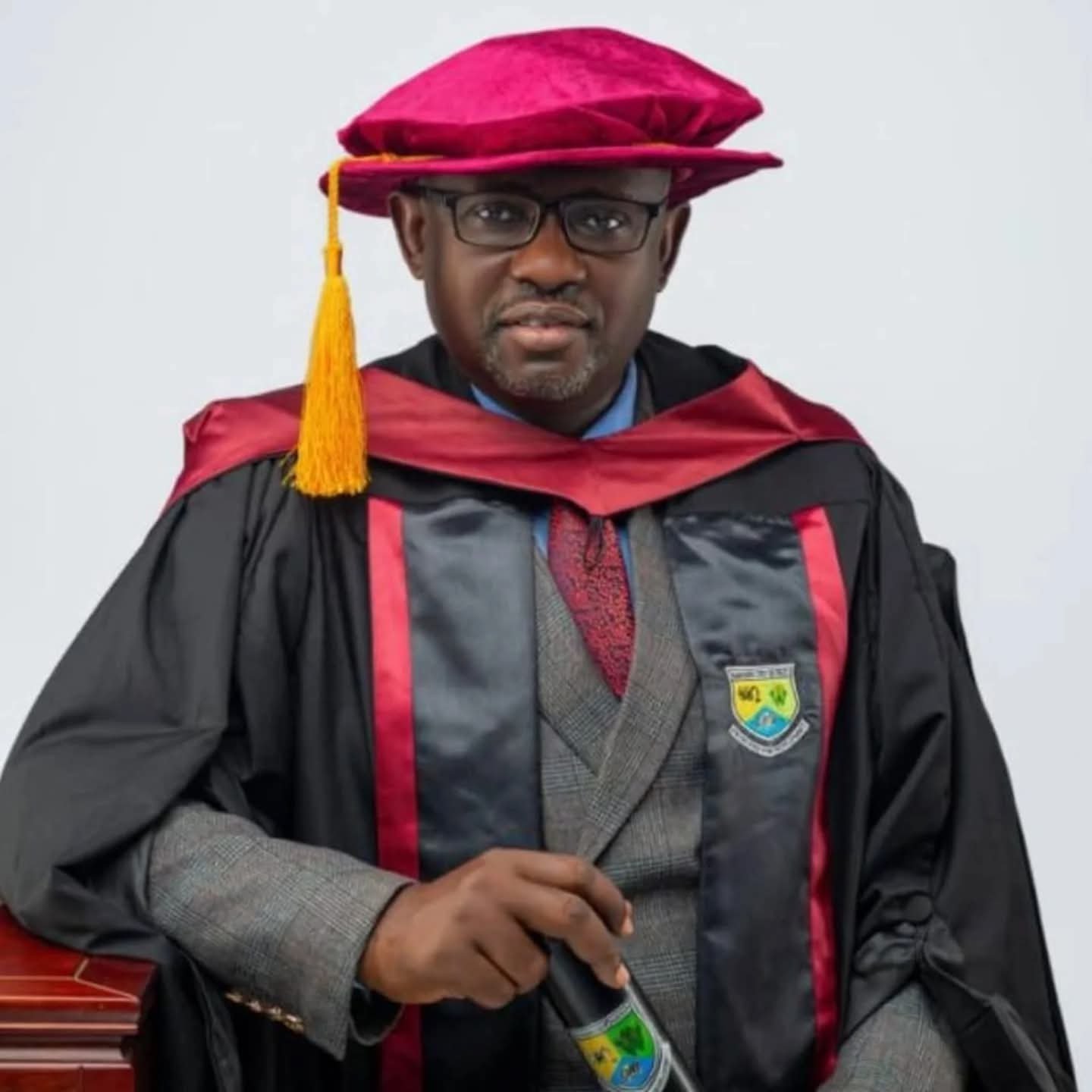
Dr. Olatunbosun was the Labour Party Candidate in Ife East Local Government for the Osun State House of Assembly during the last general election in 2023.