
The federal government has lamented that the theft of electrical cables, railway components, manhole covers and other metallic installations goes beyond loss of materials, as it disrupts essential public services, compromises public safety, increases maintenance costs and undermines national infrastructure development.
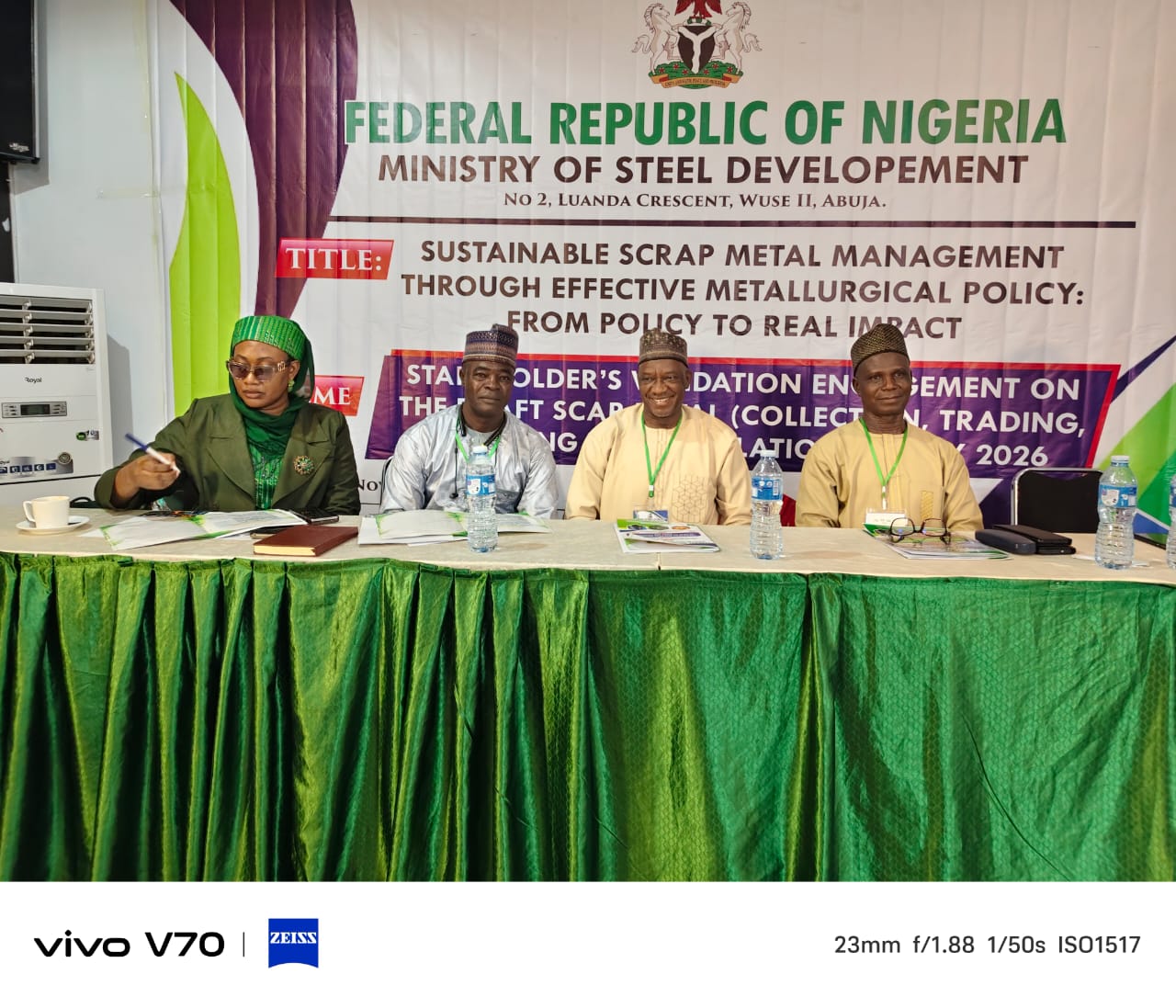
The Minister of Steel Development, Shuaibu Audu stated this on Tuesday at the second-phase Stakeholders’ Engagement for the validation of the Draft Scrap Metal (Collection, Trading, Recycling and Regulation) Regulations Policy in Kano.
Audu, represented by Director, Steel and Non-ferrous Metals Department of the Ministry, Umar Tsoho, said government has intensified efforts to sanitise Nigeria’s scrap metal industry through a comprehensive regulatory framework.
The framework, he noted, was aimed at curbing theft and vandalism of public infrastructure, promoting responsible recycling, protecting legitimate businesses and strengthening the nation’s steel and metals manufacturing sector.
Speaking on the theme, “Sustainable Scrap Metal Management through Effective Metallurgical Regulation: From Policy to Real Impact,” the minister described scrap metal as a critical resource for Nigeria’s industrial development.
He noted that its proper recovery and recycling could significantly support steel making, foundry operations, employment generation and development of a sustainable circular economy.
Audu in a statement issued by Head, Press & Public Relations of the ministry, Tine-Iulun said Nigeria’s ambition to build a stronger and more competitive steel industry requires an organised scrap metal value chain.
He stressed that this would ensure materials are lawfully sourced, safely handled, properly documented and reliably supplied to legitimate industrial users.
Audu warned that an inadequately regulated scrap metal industry could encourage theft and vandalism of public and private infrastructure, unsafe dismantling practices, environmental degradation and significant economic losses.
The minister emphasised that the proposed regulations are designed to establish a structured system for licensing and supervising operators, regulating collection and aggregation facilities, ensuring traceability of transactions, promoting environmental and occupational safety, preventing illicit trade and strengthening monitoring and enforcement.
He clarified that government’s intention was not to suppress legitimate commercial activities or undermine the livelihoods of Nigerians engaged in scrap metal collection and trading, but to create an orderly business environment where lawful operators can thrive while criminal activities are effectively addressed.
Addressing infrastructure vandalism, he expressed concern over the illicit acquisition and trading of metallic materials sourced from public infrastructure, industrial facilities and other protected assets.
Audu said: “Theft of electrical cables, railway components, manhole covers and other metallic installations disrupts essential public services, compromises public safety, increases maintenance costs and undermines national infrastructure development.”
The Kano engagement, he explained, was designed to broaden the consultation process and incorporate additional regional and operational perspectives, particularly experiences of stakeholders in the Northern region, towards developing an inclusive, practical and nationally responsive framework.