
President Bola Tinubu will lead dignitaries to the public presentation of the authorised biography of the late President Muhammadu Buhari on November 19 in Abuja.
Former President of Niger Republic, Mahamadou Issoufou, is also expected at the event.
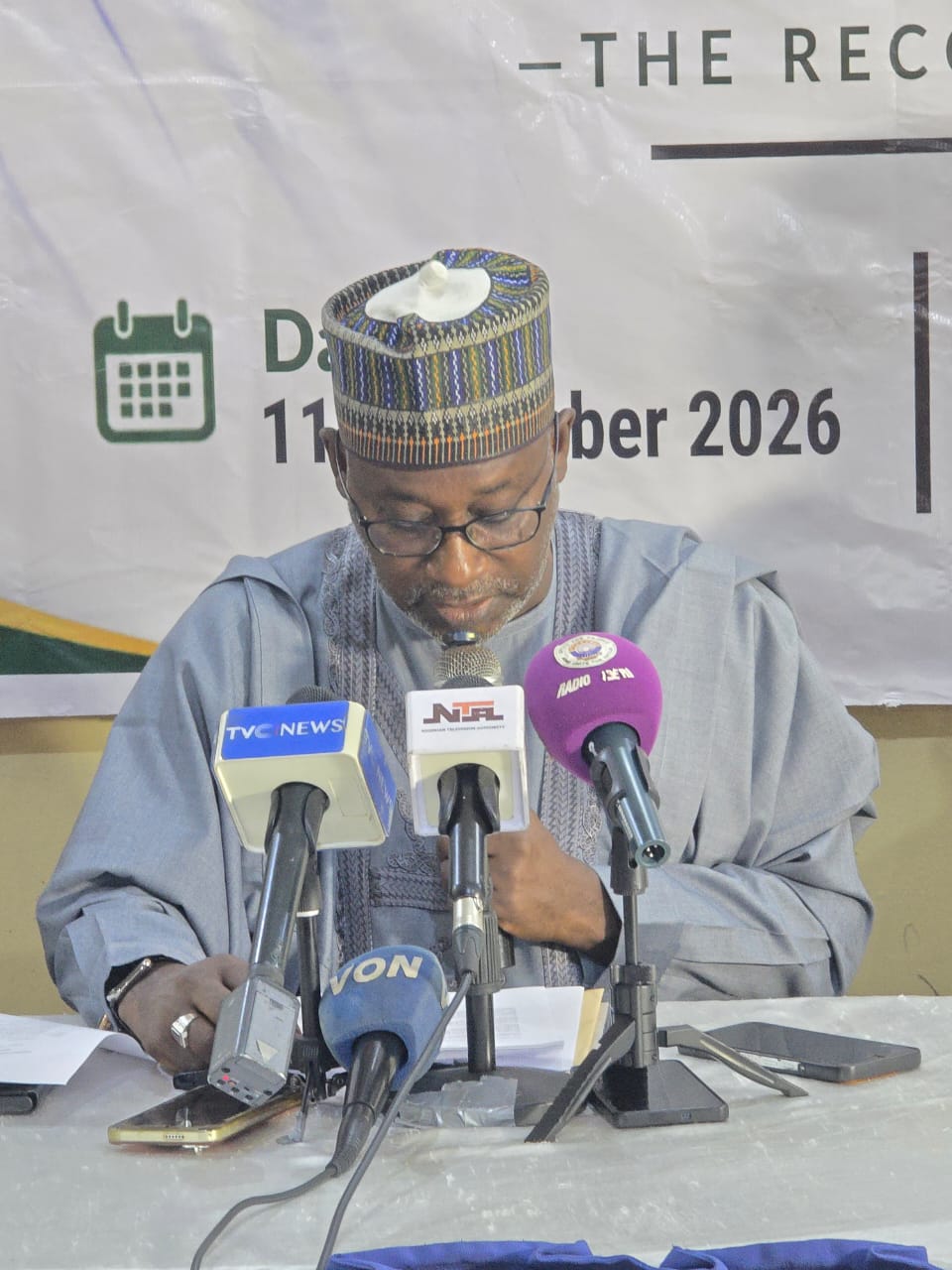
The Chairman of the Planning Committee, Suleiman Adamu, a former Minister of Water Resources, announced the date at a press conference in Abuja on Wednesday.
The three-volume biography, authored by Dr Udu Yakubu and published by May Publishing, chronicles Buhari’s life, public service and place in Nigerian history.
Adamu was emphatic: this is not a political rally, saying, “We are approaching an important moment in the documentation of Nigeria’s contemporary history.
“The public presentation is intended as a serious national occasion around history, memory, leadership, public service and the continuing responsibility of one generation to place before the next a reliable record of the people and events that shaped its time.”
Buhari’s public life, Adamu said, lasted more than half a century and crossed military and civilian rule, triumph and detention, opposition and power.
He was a soldier and military commander, military governor, federal commissioner, military Head of State, political detainee, serial presidential candidate, opposition leader, and finally a two-term democratically elected President from 2015 to 2023.
“Few Nigerian public figures have experienced so many reversals of fortune, or returned so repeatedly to the centre of national affairs.”
“For over 50 years, his name never left the national conversation. He inspired loyalty and resistance, admiration and criticism in equal measure.
“To tell the story of Muhammadu Buhari is inevitably to enter into the larger story of Nigeria itself. That is why this biography is important.”
Adamu said the project was authorised by Buhari himself and built on prolonged research — interviews with people who knew him at different stages, participants in the institutions he led, plus official records, speeches, reports and personal recollections.
On his part, the author stressed that the books are not the final word on Buhari. They are the product of more than two years of research, writing, editing, checking and revision.
His words: “To one generation, he was a young military officer. To another, the military Head of State of 1983-85, austere, severe and controversial.
“To another, the persistent opposition candidate who refused to disappear after repeated defeat. And to millions of younger Nigerians, he became principally the civilian President who governed from 2015 to 2023.
“All these Buharis belonged to the same life. The challenge was to understand how.”
He explained the titles were deliberate: “The Phenomenon speaks to Buhari’s extraordinary persistence. The Presidency moves from the pursuit of power to the consequences of possessing it. The Reckoning recognises that every public life eventually reaches the point where intention, action, consequence and historical judgement must confront one another.”
On authorisation, Yakubu was clear: ” The work was authorised by President Buhari. That authorisation opened doors. It enabled access to people, recollections and documentary trails that would otherwise have been difficult to reach. But authorisation did not mean surrendering judgement.
“The subject has had his voice in the biography, while the biographer has had or retained his independence.”
That independence mattered, he said, because Buhari remains one of Nigeria’s most divisive leaders.
“For some, he represented discipline, restraint and incorruptibility. For others, rigidity, economic misjudgement and political insensitivity.
“The work of biography lies between those positions. My task was not to decide in advance which Buhari should survive. It was to recover as much of the life as possible and allow evidence, chronology, circumstance and consequence to do their work.”
Yakubu warned that Nigeria keeps losing its history because those who made it die without recording what they knew.
He said: “Participants die. Personal papers disappear. Institutions forget. Memories harden into partisan narratives. The biographer works in that narrowing space before memory becomes irrecoverable.”
“So this is not simply a book about Muhammadu Buhari. It is also an argument for the serious preservation of Nigerian lives, institutions and national memory.”