
The Federal Ministry of Finance has dismissed reports that federal government interest payments reached 124 percent of revenue in the first half of 2026, describing the conclusion drawn from the World Bank’s October 2026 Nigeria Development Update as misleading.
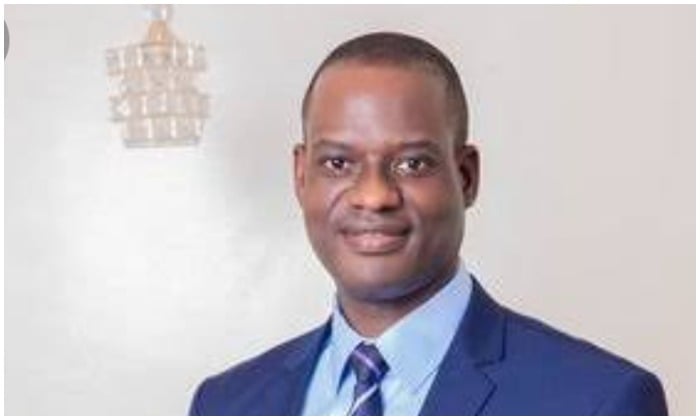
The Minister of Finance, Taiwo Oyedele in a statement issued Sunday said the analysis is flawed for three reasons.
He noted: “First, it said the calculation compares mismatched figures against an incomplete revenue base. The interest figure includes debt the federal government services on behalf of other tiers of government, including external loans to states, while measuring it against federal revenue alone overstates the ratio.
“The ministry added that the revenue figure used is incomplete as it excludes independent revenue already earned by government agencies and enterprises but not yet remitted to the Treasury.
“It also noted that more revenue is typically earned in the second half of the year due to the statutory timing of certain tax payments.”
Oyedele cited the trend in 2025, when the ratio stood at 156 percent in H1 2025 but the full-year 2025 debt-service-to-revenue ratio fell below 60 percent, down from 97 percent before the reforms.
According to him, This is a clear sign of the progress delivered by the current administration’s reforms,” the Ministry stated.
Secondly,Oyedele argued that even on the same calculation, the fiscal position has improved significantly year-on-year.
He explained that between H1 2025 and H1 2026, federal revenue rose by 72 percent from N3.6 trillion to N6.2 trillion, while interest payments rose by 38 percent from N5.6 trillion to N7.7 trillion.
The minister added: “Revenue is therefore growing almost twice as fast as interest costs. The interest-to-revenue ratio fell by 32 percentage points from 156 per cent to 124 per cent, while the gap between interest and revenue narrowed from N2.0 trillion to N1.5 trillion.
“This is the result of reforms working, not a sign of fiscal distress.
” Third, the Ministry said a half-year snapshot is not a measure of debt sustainability, which is assessed on a full-year basis.”
The minister pointed out that the same World Bank report projects Nigeria’s full-year 2026 debt service, covering both interest and principal, at 46 percent of revenue, describing it as the appropriate benchmark.
On borrowing, the ministry said all borrowing is lawful and approved, falling within limits approved by the National Assembly under the 2026 Appropriation Act and the approved borrowing plan, and conducted in compliance with the Fiscal Responsibility Act 2007 and the Debt Management Office Establishment Act 2003.
Oyedele said: “All borrowing is conducted in full compliance with the Fiscal Responsibility Act 2007 and the Debt Management Office (Establishment) Act 2003, and is published regularly by the Debt Management Office.”
The ministry said it welcomes scrutiny but urged analysts to compare like with like, read figures in context, and seek clarification where the data is unclear.