
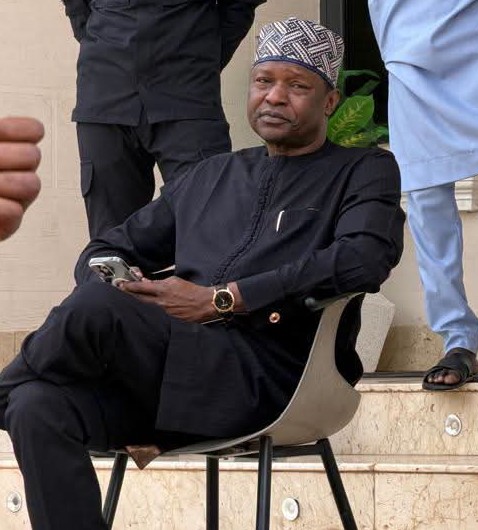
The Economic and Financial Crimes Commission (EFCC) Wednesday secured the final forfeiture of 48 properties linked to a former Attorney-General of the Federation and Minister of Justice, Abubakar Malami, SAN, to the federal government.
Delivering judgment, Justice Joyce Abdulmalik of the Federal High Court, Abuja, held that the Commission had successfully established that the properties were reasonably suspected to be proceeds of unlawful activities and were not acquired from lawful sources of income.
Among the forfeited properties are: Rayhaan University, Kebbi State, including the Rayhaan University Permanent Site, Rayhaan University Temporary Site, Rayhaan University Third Site, the Rayhaan University Vice Chancellor’s House and Rayhaan Radio along Sani Abacha Bypass Road, Birnin Kebbi.
The properties finally forfeited to the Federal Government are: a luxury duplex at Amazon Street, Plot No. 3011 within Cadastral Zone A06, Maitama District, Abuja (File No. AN 11352);
Also, a two-winged large three-storey building situated at No. 3 Onitsha Crescent, Area 11, Garki, Cadastral Zone A03, Abuja (formerly Harmonia Hotels Limited); Plot 683, Jabi District, Cadastral Zone B04, comprising a five-storey building (now luxurious Meethaq Hotels Ltd., Jabi, with 53 rooms/suites); Other property forfeited are: Property No. 3130 within Cadastral Zone A04, Asokoro District, FCT, Abuja, comprising terraces; Property No. 3 Rhine Street, Maitama, Abuja (Meethaq Hotels Ltd., Maitama, with 15 rooms); and Plot No. 1241B, Asokoro District (No. 11A Yakubu Gowon Crescent), Asokoro District, among other.
It would be recalled that on January 6, 2026, Justice Emeka Nwite granted the interim forfeiture order following an ex parte motion moved by counsel to the Economic and Financial Crimes Commission, EFCC, Ekele Iheanacho, SAN.
Sequel to the granting of the interim forfeiture order, and in compliance with the order of the court, the EFCC published the interim order in national dailies, inviting interested persons to come forward and show cause why the final forfeiture order should not be granted in favour of the Federal Government of Nigeria.
The anti-graft agency subsequently filed a motion for the final forfeiture of all the properties.
Meanwhile, following the publication of the interim order, Malami and 14 other persons, mainly his family members and associates, filed applications to show cause and also urged the court to set aside the interim forfeiture order on the properties.
They further challenged the jurisdiction of the court to grant the order and urged it not to grant the final forfeiture order.
The case was heard before Justice Joyce Abdulmalik on May 27, 2026, and the matter was thereafter adjourned for judgment.
Delivering judgment on Wednesday, the court held that the EFCC had sufficiently established that the 48 properties were reasonably suspected to have been acquired with proceeds of unlawful activities, and that the respondents failed to discharge the evidential burden placed on them, as they could not show the legitimate sources of the funds used in acquiring the properties.
The court further held that the respondents merely claimed ownership of the properties without providing proof of how they acquired them with funds from lawful sources.
According to the court, non conviction-based forfeiture proceedings require respondents to adduce evidence showing the lawful sources of the funds used in acquiring the properties, and not merely make bare assertions of ownership.