
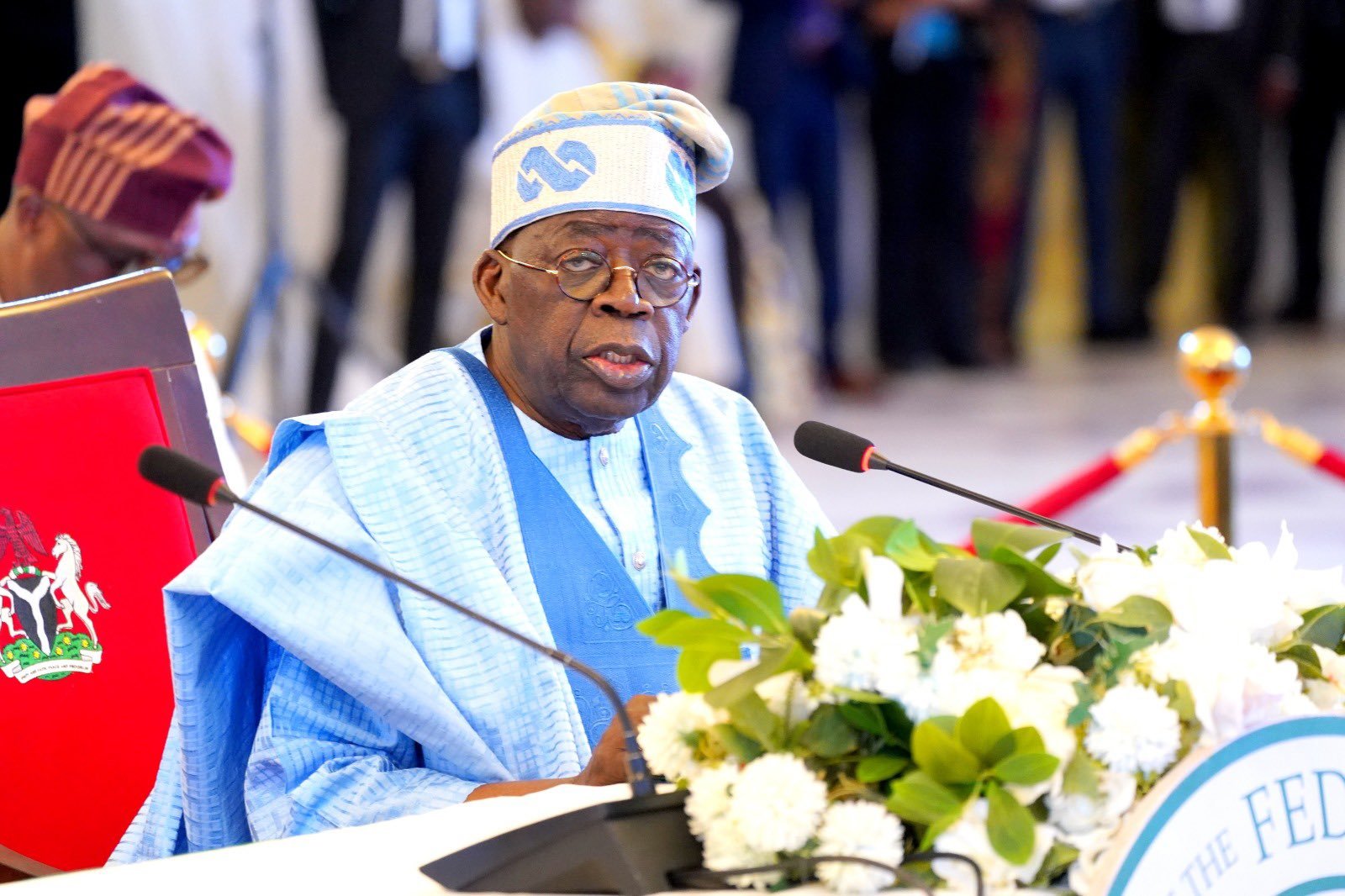
President Bola Tinubu has said that Nigeria would have drifted toward fiscal breakdown, worsening poverty, and severe economic uncertainty if his administration has not removed fuel subsidy and hakt multiple exchange rates.
The President stated this on Friday in a nationwide broadcast to mark his third year in office.
Tinubu recalled that when he assumed office, the nation faced profound economic and structural difficulties.
He added that mounting fiscal pressures, unsustainable fuel subsidies, declining revenues, exchange-rate distortions, rising debt-servicing costs, insecurity in several parts of the country, energy supply constraints, and declining public confidence in institutions all threatened our progress.
The President noted: “Three years ago, you entrusted me with the sacred responsibility of leading our beloved nation at a defining moment in our history. I accepted that responsibility, fully aware of the magnitude of the challenges before us, but also deeply confident in the resilience and potential of the Nigerian people.
“Today, on the occasion of the third anniversary of our administration, I speak to you not only as your President but also as a fellow citizen who understands the sacrifices many families have made in recent years and shares your hopes for a better Nigeria.”
The President stressed that at the height of the subsidy regime, Nigeria was spending as much as ₦18.4 billion daily to sustain petrol subsidies—over ₦4 trillion in 2022 alone—resources that could have been invested in roads, healthcare, education, housing, and critical infrastructure.
He explained that multiple exchange rate windows and forex arbitrage created massive distortions, with Nigeria losing more than ₦8 trillion over three years to rent-seeking and speculative practices.
According to him, The situation demanded urgent and courageous action. Difficult but necessary decisions had to be taken to stabilise the economy and prevent a deeper national crisis. The easy choices would have been politically convenient. But leadership demands courage, especially when the right decisions are difficult.
“Had we refused to act, our nation would have drifted toward fiscal breakdown, worsening poverty, and severe economic uncertainty. Together, we chose reform over ruin and decisiveness over hesitation. We chose long-term national recovery over short-term comfort.”
These decisions, Tinubu added, came with sacrifice, saying that the rising cost of living triggered by the measures placed enormous pressure on families, workers, and businesses.
He said young people searching for jobs felt discouraged, while many questioned whether these difficult decisions would lead to a better future.
Tinubu said: “I remain deeply conscious of those sacrifices, and I assure you: your sacrifice has not been in vain. And today, I can say with confidence that Nigeria has stabilised and is moving forward again. Across the country, visible progress is taking shape.
“Our economy is now more competitive and better positioned for sustainable growth than it was in 2023. Public finances are improving. States and local governments have greater resources to invest in their people.
“Investor confidence is growing. The stock market is booming, with the All Share Index rising from 53,000 and market capitalisation of N30 Trillion in 2023 to a record All Share Index of 250,000 and market capitalisation of N160 Trillion this year. Companies are declaring record profits and dividends.
“My fellow Nigerians, history tests nations before it elevates them. Nigeria is passing through such a test. But I believe with all my heart that we shall emerge stronger, fairer, more united, and more prosperous than ever before.
“Let us continue this journey together. Let us build a Nigeria that is secure, prosperous, inclusive, and respected worldwide. Let us continue to believe in the promise of our nation.”