
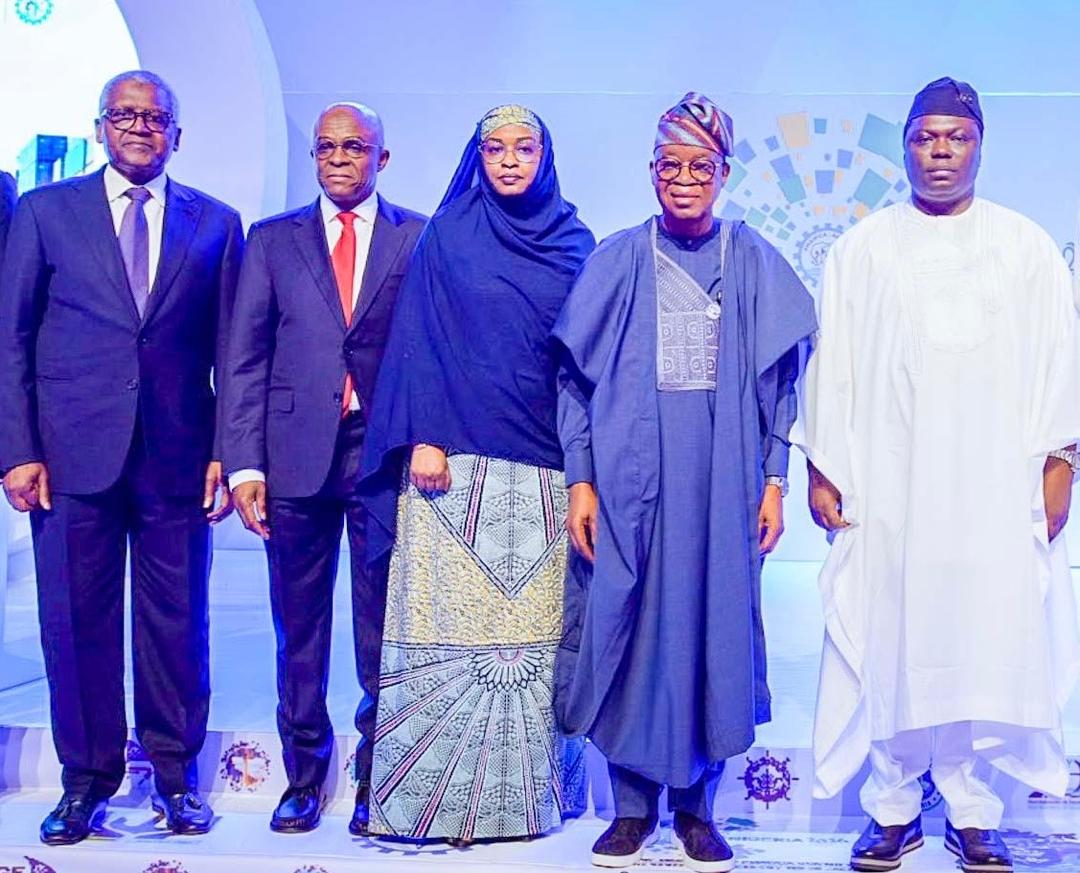
The Minister of Marine and Blue Economy, Adegboyega Oyetola, Monday said Nigeria is expanding its port capacity and implementing major maritime reforms aimed at positioning the country as the leading trade and logistics hub in West and Central Africa.
Oyetola said this while declaring open the Mid-Year Session of the Board of Directors of the Port Management Association of West and Central Africa (PMAWCA) in Victoria Island, Lagos.
The meeting is themed, “Ports of the Future: Combining Logistical Resilience with Inclusive Community Development.”
The minister said the federal government had approved the development of additional deep seaports across the country to strengthen supply chain resilience and improve Nigeria’s competitiveness in the global maritime industry.
According to him, Approvals have therefore been granted for the development of additional deep seaports across the country to complement existing infrastructure, strengthen supply chain resilience, and reinforce Nigeria’s position as the preferred maritime and logistics hub for West and Central Africa.
The minister in a statement issued on Monday by his Special Adviser on Media, Bolaji Akinola, added that the administration of President Bola Tinubu remained committed to modernising the nation’s ports through infrastructure upgrades, digital transformation and improved operational efficiency.
He noted that coordinated policy interventions and stronger inter-agency collaboration had significantly reduced logistics bottlenecks at major seaports.
“These efforts have contributed to improved cargo evacuation, reduced vessel waiting time, greater operational efficiency, and a more predictable business environment for port users and investors,” Oyetola said.
Oyetola described the federal government’s National Single Window initiative as a landmark reform designed to streamline cargo clearance through digital integration of government agencies and port operations, adding that existing seaports would undergo comprehensive upgrades, including channel deepening, to attract larger vessels.
“These upgrades are critical to ensuring that our ports remain globally competitive and capable of supporting larger volumes of trade in the years ahead,” he noted.
On maritime security, Oyetola said the implementation of the Deep Blue Project had eliminated piracy in Nigerian waters and drastically reduced maritime crimes across the Gulf of Guinea.
He noted that the achievement had restored investor confidence and strengthened the region’s attractiveness as a secure maritime corridor for international commerce.
Earlier, the Managing Director of the Nigerian Ports Authority and President of PMAWCA, Dr. Abubakar Dantsoho said West and Central Africa was witnessing a major resurgence in maritime infrastructure investment, with more than $27 billion worth of port projects underway or recently announced across the sub-region.
Dantsoho cited major projects including the $20 billion Simandou-Morebaya Deep Sea Port project in Guinea, the $2 billion Port San Pedro project in Côte d’Ivoire, the $1.5 billion Lekki Deep Sea Port in Lagos, and port developments in Ghana and Senegal.
He also highlighted ongoing investments in Nigeria’s Apapa and Tin Can Island ports, alongside a $600 million investment by APM Terminals.